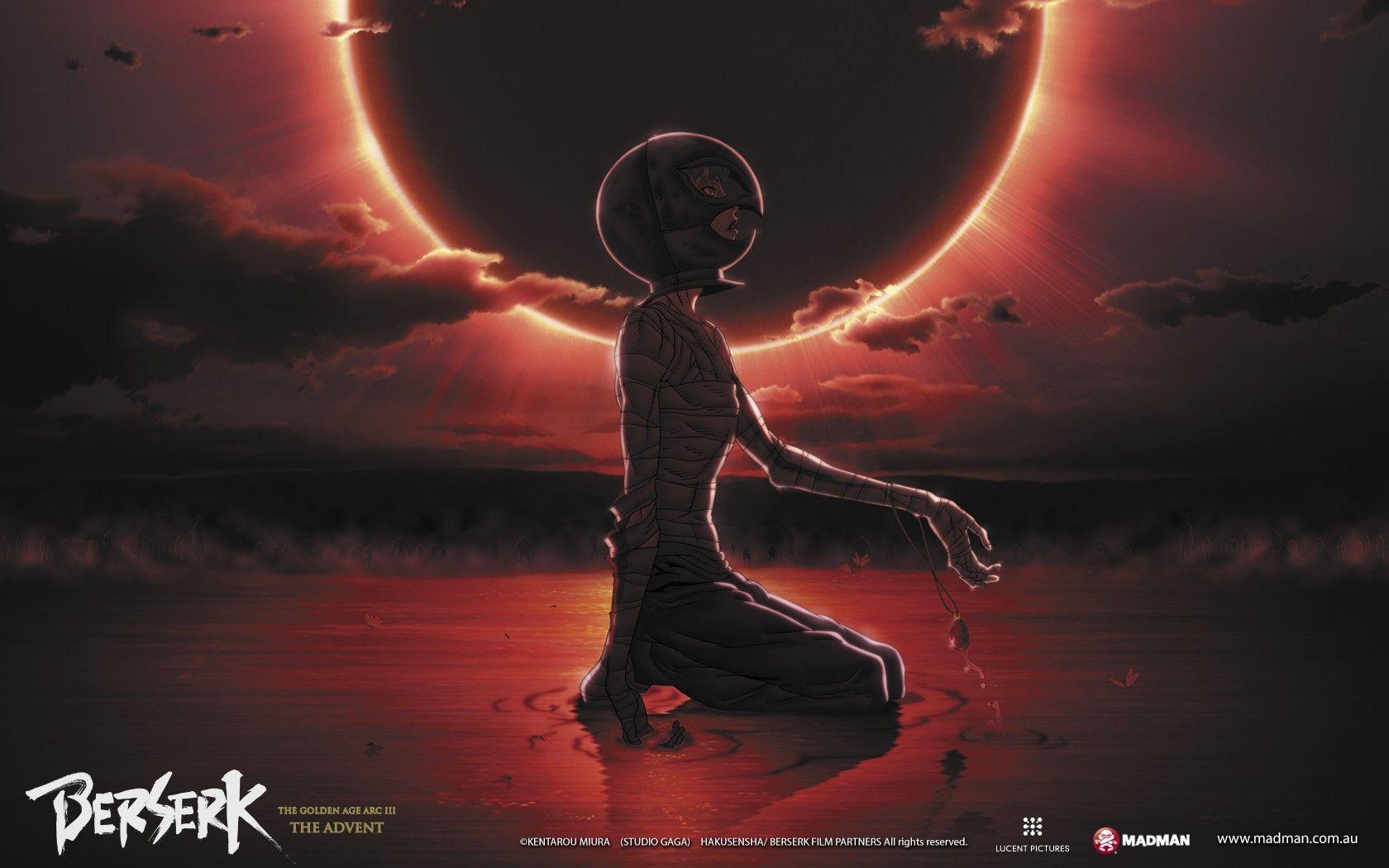
The bonfire scene in Berserk wrecked me.
Not the Eclipse. Not the body horror or betrayal everyone warns about. A conversation—Guts and Casca talking about soldiers with small dreams, people huddling around Griffith's massive fire because they're too scared to let their own sparks die.
Then Guts says it: "I didn't bring any flame of my own. I just stopped by to warm myself."
I had to pause. How many years had I done exactly that?
I found Berserk during a low point—the '97 anime, then the movies, then deep into the manga. I expected grim fantasy and brutality. I got that, but what truly shook me was far more personal.
(Play Guts' Theme while reading if you want the full weight.)
The Moment Everything Shifted
Picture this: the Band of the Hawk fresh off a victory. Bonfire roaring, laughter, drinks flowing. Griffith, the untouchable leader, chats with Princess Charlotte about true friendship.
Guts overhears from the shadows. Griffith drops the line that changes everything—that a real friend doesn't depend on someone else's dream. They have to find their own reason to live.
In that instant, Guts realizes he's been nothing but a tool. The strongest blade in Griffith's arsenal, sure—but still just a means to an end.
The Band of the Hawk in their golden days—before it all burned.
He'd spent his entire life fighting for Griffith's kingdom. Born hanging from his mother's corpse, raised by mercenaries who abused him, swinging a sword bigger than himself since childhood. Survival was all he knew. Being useful to Griffith's ambition felt like belonging. Like purpose.
Until he learns he's not even seen as a friend. Just someone warming himself by the fire.
The Bonfire Metaphor That Broke Me
Later, on a quiet hilltop, Guts opens up to Casca about the soldiers' small dreams—a shop after the war, a marriage proposal. Fragile little flames.
He compares them to people huddling around Griffith's massive bonfire, too scared to let their own sparks die out in the wind.
Then he admits: "I didn't bring any flame of my own. I just stopped by to warm myself by that bonfire."
I had to pause the episode. That line wrecked me.
How many years had I done the exact same? Feeding someone else's vision—bosses, projects, relationships—while my own ideas stayed cold and unlit. Telling myself proximity to their fire was enough.
It's not.

guts and casca
The Irony of the Dragonslayer
Guts' sword says everything about him.
It's called the Dragonslayer: a monstrous slab of raw iron, over six feet long, weighing hundreds of pounds. Too big and crude to even be called a proper sword—just a "heap of raw iron."
The blacksmith forged it to kill a dragon. But in this world, dragons don't exist... until apostles and God Hand show up.
The irony? A weapon made for mythical beasts becomes Guts' tool against very real demons. It lets him carve through nightmares, but its sheer weight isolates him from any normal life. He can't sheath it properly, can't live quietly. It's a burden he chose—one that represents his rage, his independence, his refusal to be anyone else's tool again.
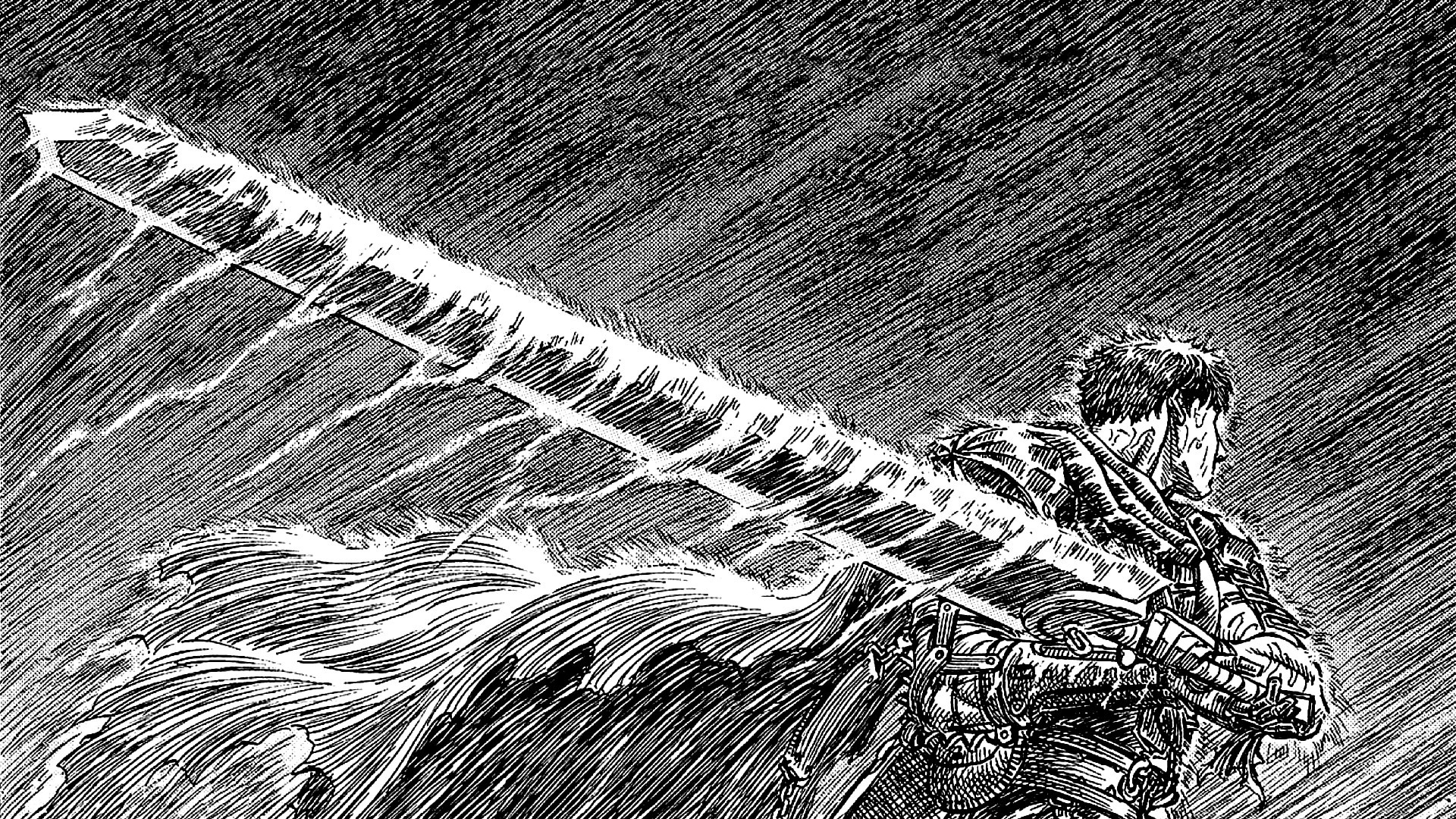
The Dragonslayer—symbol of Guts' heavy, solitary path.
The Duel in the Snow
Guts challenges Griffith to earn his freedom. No rage, just resolve. Watch it as no words do it justice: You are going to be alright! I WONT EXPLAIN FURTHER
When You Finally Walk Away
Guts left not out of hate, but realization: being Griffith's sword wasn't enough. He needed something that couldn't be taken away.
The world punished him brutally for it. Griffith sacrificed the entire Band of the Hawk to become Femto.
When you build your existence around someone else's dream, you're fuel waiting to be consumed.
Griffith's Shadow
Griffith isn't just evil—he's magnetic. A common-born child who once couldn't afford a slice of bread, he climbs from the cobblestone back alleys through sheer will, charisma, and ruthless focus on his dream. People willingly give everything to him because his vision feels bigger than their own lives.
The Pull: I was drawn to Griffith at first—his ambition, his refusal to accept limits. His beauty described as "someone out of a fairy tale," his genius-level intellect, his unmatched swordsmanship. When he saved a young Casca from assault, throwing her a sword and telling her to wield it if she had something to protect, he seemed like the hero. His vision makes ordinary life seem small. I LOVED HIM.
But here's what I missed: Griffith's own words to Princess Charlotte define everything. He says a true friend must be his equal—someone who pursues their own dream with the same intensity, who would even fight him for it. Beautiful philosophy, right?
Except Griffith doesn't actually want equals. He wants the appearance of noble ideals while treating everyone as stepping stones.
The Reality: When he gazes at that mound of corpses—all those who died for his dream—he doesn't mourn them. He tells himself their deaths would be meaningless if he stopped now. It's a self-justifying loop: I must keep winning to honor the dead. To win, I need more corpses. More corpses mean I must keep winning.
This is how he sold his body to the nobleman Gennon, rationalizing it as necessary for his men's survival. Years later, when facing Gennon on the battlefield, Griffith coldly tells him he was merely using him—"a stone lying by the side of the path I walk." Then pierces his skull to silence him.
The Possession: What terrified me most was Griffith's possessiveness masked as camaraderie. After their first duel, he tells Guts: "You belong to me. I will decide the place where you die." When Guts tries to leave, Griffith doesn't accept it—he'd rather strike him down than release him.
During his year of torture, it's not his dream that sustains Griffith in the darkness—it's his obsession with Guts. The one person who made him lose his composure. The one who shone so bright within him that his "sacred junk" castle grew dull by comparison.
The Truth: Followers aren't friends or equals—they're fuel. Griffith uses devotion completely, and when he needs to step higher, he discards them without hesitation. As Femto, stripped of all human emotion, he confirms this: "I'll not betray my dream. That is all."
The scariest part? Griffith never lies about his dream. He just doesn't mention you'll burn to make it real.
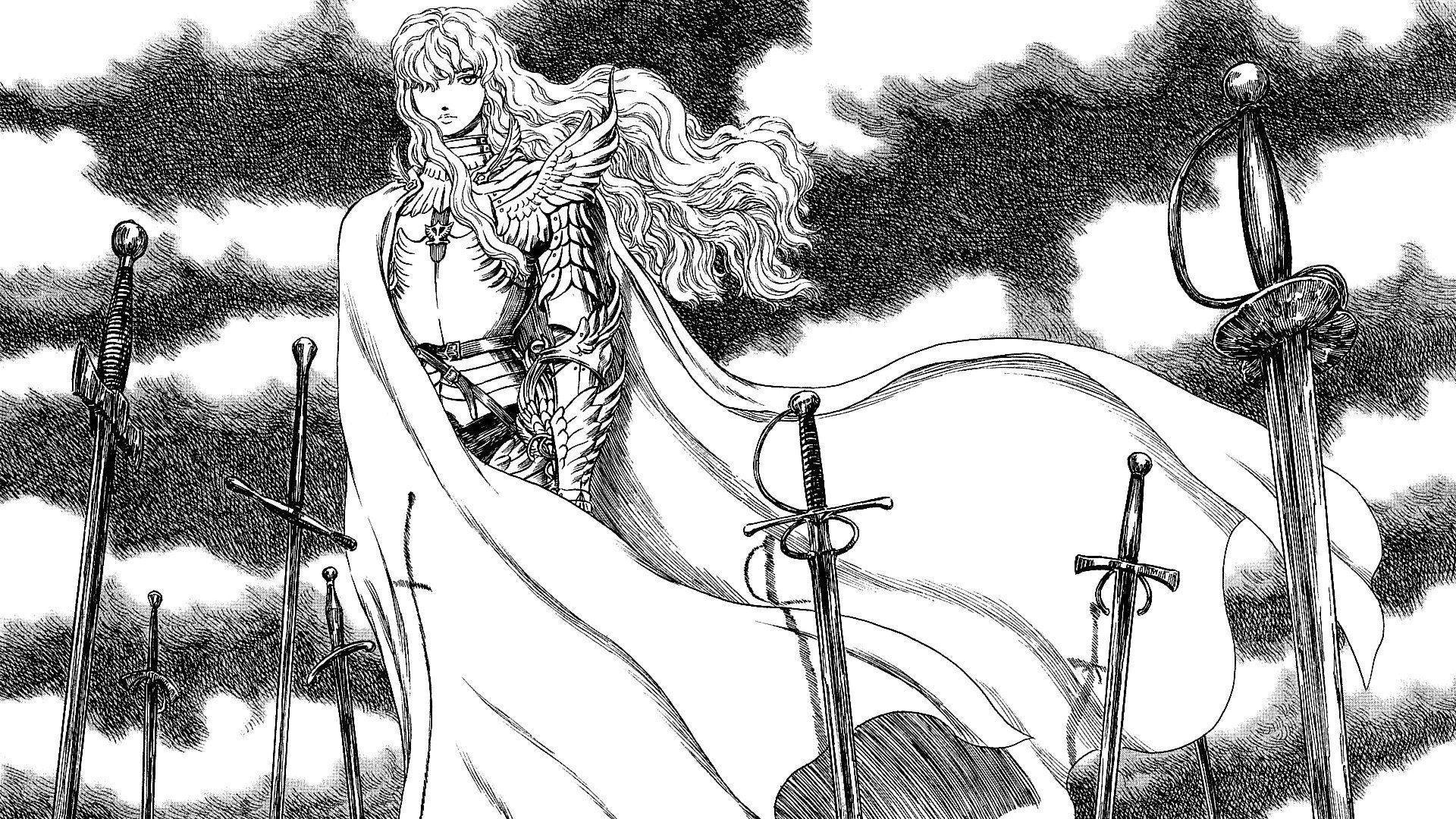
Griffith's dream—beautiful from afar, consuming up close.
After the Fire
Post-Eclipse Guts is shattered. Revenge fuels him at first. But slowly, he carves out new reasons—protecting Casca, reluctant companions, fighting so others don't suffer the same.
No happy ending. The struggle never stops. Demons hunt him every night. He's still bleeding, still swinging that impossible sword.
But it's his struggle now.
Carrying My Own Flame
Berserk doesn't hand you comfort. You can't recover the years you spent as someone else's tool. You can't pretend the bonfires you warmed yourself by never existed.
What you can do is finally strike your own spark—even if it's small, even if the wind threatens to snuff it out every night.
Walking away will feel like betrayal to those who relied on you to keep their fire bright. Some will hate you for it. Some dreams will collapse without your fuel.
But staying means letting your own potential die quietly, one borrowed ember at a time.
I'm still learning to protect my flame. It's fragile. Some days it barely glows. But no one can take it from me unless I let them.
And that's the difference.